Welcome to cellofingerboard.info!
cellofingerboard.info is a resource for all cello players who want to know more about fingerboard geography and intonation. The web application enables these topics to be presented visually and acoustically.
Foreword
The cello fingerboard is a piece of hardwood about 22.7 inches (57.5 cm) long. There are no markings or frets to show the player where to place their fingers. It is all the more astonishing how precisely practiced cellists target certain points on the fingerboard with millimeter precision. A well-trained ear, many years of practice and motor memory make this possible. What can help is having an mental image of the points on the fingerboard, or to put it more figuratively, having a map in your head of all the note locations. One therefore also speaks of the geography of the fingerboard. The aim of this web application is to display this map mathematically correctly and to make the corresponding sounds audible. cellofingerboard.info offers not only one map, but several. In contrast to the guitarist, the cellist is not limited by frets to just twelve semitones per octave, but has the option of intonating a tone differently depending on the harmonic context. So for example an E on the cello is played lower when it should match the C or G string than when it should match the A string. On the other hand, if the E is to tune to an E on the piano, it must again be intonated slightly lower than the E tuned to the A string. So, for the E, there are at least three distinct points on the fingerboard that are close together. How big these fine intonation differences are can be made visible and audible here. Furthermore, the positions of the cello and the natural harmonics can also be displayed.
Instructions for use
In the menu you can choose what should be displayed on the fingerboard. All points on the fingerboard as well as the points on the nut (open strings) play the corresponding sound when clicked/tapped. You can find more information about each section of the menu via the question mark icon.
The graphics of the cello are drawn mathematically and depend on the screen height. If you increase the height of the browser window after loading the page, you can adapt the graphic to the window again by reloading the page.
Use the keyboard shortcuts [cmd][+] and [cmd][-] (Mac) or [ctrl] [+] and [ctrl][-] (Windows) to change the view size! On touch devices use two fingers to zoom in or out!
About the author
My name is Rupert Hunz. I am a cellist and cello teacher from Switzerland. Even before my studies, I calculated the frequencies and string ratios of the intervals in different tuning systems and drew the fingerboard with the equal "frets" in the original size in a mathematically correct way. Above all, playing in a string quartet made me aware of the complexity of intonation. As a result, I dealt with it intensively, which finally led to this web application.
If you have any questions or suggestions about this web application, you can contact me via my website ruperthunz.com
Enjoy cellofingerboard.info!
Rupert Hunz
Wilkommen zu cellofingerboard.info!
cellofingerboard.info ist eine Informationsquelle für alle Cellospielende, die mehr über die Geographie des Griffbretts und die Intonation wissen möchten. Die Webapplikation ermöglicht, diese Themen visuell und klanglich darzustellen.
Vorwort
Das Griffbrett des Cellos ist ein etwa 57.5 cm langes Stück Hartholz. Es gibt keinerlei Markierungen oder Bünde, die dem Spieler anzeigen, wo die Finger zu platzieren sind. Umso erstaunlicher ist es, wie präzise geübte Cellisten bestimmte Punkte auf dem Griffbrett millimetergenau treffen. Ein gut geschultes Gehör, viele Jahre Übung und das motorische Gedächtnis ermöglichen dies. Was dabei helfen kann, ist eine innere Vorstellung der Punkte auf dem Griffbrett, oder bildlicher ausgedrückt, eine Landkarte mit allen Tonorten im Kopf zu haben. Man spricht daher auch von der Geographie des Griffbretts. Diese Landkarte mathematisch korrekt darzustellen und dabei die entsprechenden Töne hörbar zu machen, ist Ziel dieser Webapplikation. cellofingerboard.info bietet nicht nur eine Landkarte an, sondern mehrere. Denn im Gegensatz zum Gitarristen ist der Cellist nicht durch Bünde auf lediglich zwölf Halbtöne pro Oktave limitiert, sondern hat die Möglichkeit, einen Ton je nach harmonischen Kontext verschieden zu intonieren. So wird z. B. ein E auf dem Cello tiefer gespielt, wenn es zur C- oder G-Saite stimmen soll als wenn es zur A-Saite stimmen soll. Wenn das E hingegen zu einem E auf dem Klavier stimmen soll, muss es wiederum minimal tiefer als das zur A-Saite stimmende E intoniert werden. Für das E gibt es also mindestens drei verschiedene, nahe beieinander liegende Punkte auf dem Griffbrett. Wie gross diese feinen Intonationsunterschiede sind, kann hier sicht- und hörbar gemacht werden. Des Weiteren können auch die Lagen des Cellos sowie die natürlichen Flageoletttöne angezeigt werden.
Zur Bedienung
Im Menu kannst Du auswählen, was auf dem Griffbrett angezeigt werden soll. Alle Punkte auf dem Griffbrett sowie die Punkte auf dem Obersattel (leere Saiten) geben beim Anklicken/-tippen den entsprechenden Ton wieder. Zu jedem Abschnitt des Menus findest Du über das Fragezeichen-Icon weitere Informationen.
Die Graphik des Cellos ist mathematisch gezeichnet und richtet sich nach der Bildschirmhöhe. Solltest Du nach dem Laden der Seite die Höhe des Browserfensters vergrössern, kannst Du die Graphik durch erneutes Laden der Seite wieder dem Fenster anpassen.
Verwende die Tastenkombinationen [cmd][+] und [cmd][-] (Mac) bzw. [strg] [+] und [strg][-] (Windows) um die Ansichtsgrösse zu verändern! Bei Geräten mit Touchscreen, ziehe zwei Finger auseinander oder zusammen, um herein- oder herauszuzoomen!
Über den Autor
Mein Name ist Rupert Hunz. Ich bin ein Cellist und Cellopädagoge aus der Schweiz. Bereits vor meiner Studienzeit rechnete ich Frequenz- und Saitenverhältnisse der Intervalle in verschiedenen Stimmungssystemen aus und zeichnete das Griffbrett mit den gleichstufigen "Bünden" in Originalgrösse mathematisch korrekt nach. Vor allem durch das Spielen im Streichquartett wurde mir die Komplexität des Themas Intonation bewusst. In der Folge setzte ich mich intensiv damit auseinander, was schliesslich zu dieser Webapplikation führte.
Falls Du Fragen oder Anregungen zu dieser Webapplikation hast, kannst Du mich über meine Website ruperthunz.com kontaktieren.
Viel Freude an cellofingerboard.info!
Rupert Hunz
Tune
equal
Tunes the strings in equal fifths.
How do you tune cello strings in equal fifths?
To tune cello strings in equal fifths, you need a tuner. Tuners are calibrated in equal steps.
just
Tunes the strings in just fifths.
How do you tune the cello strings in just fifths?
In order to tune the strings of the cello in just fifths, you must tune by ear. A fifth is just when there is no beat in the sound. If you are not sure if there is a beat in the sound, detune the fifth so much that you hear a regular pulsing or "boom" (wooah-wooah-wooah-wooah...) in the sound. This pulsation is the beating. Now concentrate on the beating and turn the fine tuner. If the beating gets faster, you're turning in the wrong direction. If the beating slows down, you're on the right track. If the beating has come to a standstill, the fifth is just.
An equal fifth has a frequency ratio of 2 7/12 = 1.498 and is slightly narrower than a just fifth, whose frequency ratio is 3/2 = 1.5. When playing together with a piano or another instrument tuned in the equal temperament, it is usually advantageous to tune the strings in close (not just) fifths. On the other hand, if you play alone or with other cellos or violas, you can tune the strings in just fifths. When playing in a string quartet or with instruments that are not in the C-G-D-A tuning, the instruments, the key, the piece, or personal preference can determine the type of tuning.
Saiten
gleichst.
Stimmt die Saiten in gleichstufigen Quinten.
Wie stimmt man die Saiten des Cellos in gleichstufigen Quinten?
Um die Saiten des Cellos in gleichstufigen Quinten zu stimmen, braucht man ein Stimmgerät. Stimmgeräte sind gleichstufig kalibriert.
rein
Stimmt die Saiten in reinen Quinten.
Wie stimmt man die Saiten des Cellos in reinen Quinten?
Um die Saiten des Cellos in reinen Quinten zu stimmen, muss man nach Gehör stimmen. Eine Quinte ist rein, wenn sich keine Schwebung im Klang befindet. Wenn Du Dir nicht sicher bist, ob es eine Schwebung im Klang gibt, verstimme die Quinte so sehr, dass Du ein regelmässiges Pulsieren oder „Wummern“ (wuah-wuah-wuah-wuah...) im Klang hörst. Dieses Pulsieren ist die Schwebung. Nun konzentriere dich auf die Schwebung und drehe am Feinstimmer. Wird die Schwebung schneller, drehst Du in die falsche Richtung. Wird die Schwebung langsamer, bist du auf dem richtigen Weg. Ist die Schwebung zum Stillstand gekommen, ist die Quinte rein.
Eine gleichstufige Quinte hat ein Frequenzverhältnis von 2 7/12 = 1.498 und ist minimal enger als eine reine Quinte, deren Frequenzverhältnis 3/2 = 1.5 beträgt. Spielt man mit Klavier oder einem anderen gleichstufig gestimmten Instrument zusammen, ist es meistens von Vorteil, die Saiten in engen (nicht reinen) Quinten zu stimmen. Spielt man hingegen alleine oder mit anderen Celli oder Bratschen zusammen, kann man die Saiten in reinen Quinten stimmen. Beim Spielen im Streichquartett oder mit Instrumenten, die nicht die C-G-D-A-Stimmung haben, können die Instrumente, die Tonart, das Stück oder die persönliche Vorliebe für die Art der Stimmung entscheidend sein.
Points
equal
Shows where the equal temperament points are located. If the strings are tuned in equal fifths, the points of all strings are parallel. If the strings are tuned in just fifths, the points of each lower string will shift slightly. In addition, "octave points" are displayed very close to the upper nut. This is missing on the A string, since the equal and just A are identical (at least when tuned from the A). If no string tuning is selected, the points are displayed in equal string tuning.
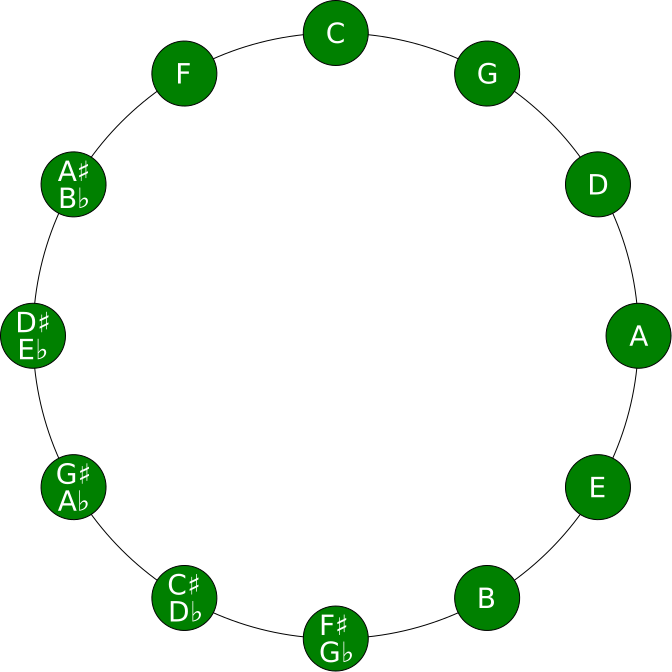
In equal temperament the octave is divided into twelve equal semitone steps. Thus, not only are all semitone steps the same size, but also all other interval steps. If you line up the twelve tones in fifths, you reach the starting tone again after twelve fifth steps. If you close this row of fifths to form a circle, you get the so-called circle of fifths. Equal temperament is therefore a closed temperament system consisting of twelve tones.
How do you find the tones of equal temperament on the cello?
You cannot check whether you have hit a certain equal note exactly with just the cello and your ears. To do this, you need either an instrument tuned to the equal temperament that plays exactly this note (prime or octave) or a tuner, because tuners are tuned to the equal temperament. If you play together with the piano, you mostly move in the equal temperament because the played cello tone is usually doubled in the piano part. The advantage of equal temperament is that there are only twelve tones/intervals and they are intonated exactly the same in every key. The downside is that, with the exception of the octave, none of the intervals are just. Most of the time this doesn't bother us because we've gotten so used to the equal temperament. But anyone who plays the following examples on the cello will notice how "out of tune" the equal temperament is basically.
Example 1: tune the strings with the tuner. Play the second finger (F, B♭, or E♭) in the first position on the D, G, or C string. Intonate the note so that the tuner reads it as just right. Without changing your finger, play the upper open string along with it. Does that sound just right to you?
Example 2: tune the strings with the tuner. Play the first finger (E or A) in the first position on the D or G string. Intonate the note so that the tuner reads it as just right. Without changing your finger, play the upper or lower open string. Does that sound just right to you?
Would you like to know how to play the tones of these examples just right? Then read the section on just points.
just
Shows where the just temperament points are located. If the strings are tuned in just fifths, the points of all strings are parallel (if they are in the same row of fifths, more on that later). If the strings are tuned in equal fifths, the points of each lower string shift slightly. If no string tuning is selected, the points are shown in just string tuning.
Since the cello, in contrast to keyboard instruments, does not have a fixed tuning of the individual notes, the player can intonate freely, with the exception of the open strings. This means that he can intonate just intervals to any note. The just intonation system is best represented graphically in a grid of relationships of fifths and major thirds (Euler's Tonnetz). In the horizontal direction, the tones are arranged in fifths (rows of fifths), in the vertical direction in major thirds (columns of thirds).
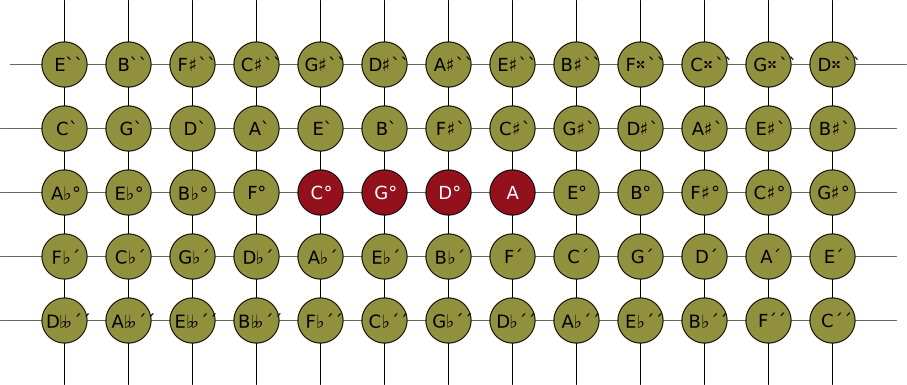
The fifth is on the right of every note, the lower fifth on the left, i.e. fourth, above the major third and below the lower major third, i.e. minor sixth. Theoretically, this web of tones can be spun indefinitely. So it is an open tuning system that theoretically consists of an endless number of tones and intervals. cellofingerboard.info shows a useful excerpt from this network of relationships between fifths and thirds.
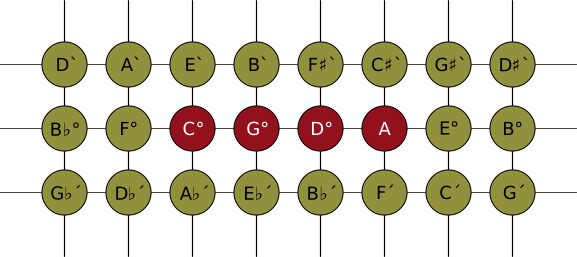
Because this system entails different tones hitting the same note name, I added diacritics to the note names for unique identification. The circle (°) means that the tone is in the same row of fifths as the open strings (zero row). The grave accent (`) means that the tone is in the fifth row of the upper third (upper third row). The acute (´) means that the tone is in the row of fifths of the lower third (row of lower thirds). Tones of the upper third row are a syntonic comma lower, tones of the lower third row a syntonic comma higher than their namesake from the zero row.
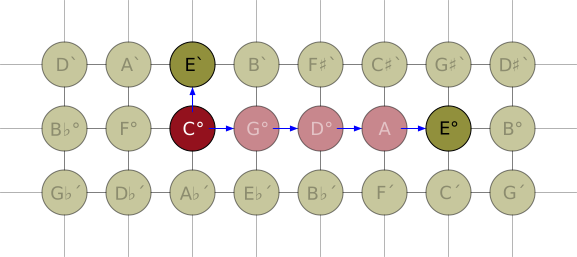
The syntonic comma is the difference between the Pythagorean third (four fifth steps to the right in Euler's Tonnetz) and the pure third (one third step up in Euler's Tonnetz).
How do you find the tones of just intonation on the cello?
A few of the just tones from Euler's Tonnetz can be played on the cello alone. The easiest tones are those that are in a direct fifth, fourth, third or sixth relationship to the upper or lower open string. Here are the above examples again from the equal points section:
Example 1: tune the strings in just fifths, i.e. not with the tuner, but by ear (if you don't know how to do this, you will find instructions on how to do this in the tune section). Play the second finger (F, B♭ or E♭) on the D, G or C string in the first position and play the top open string along with it. Intonate the note so that no beats can be heard. If you now leave the open string and only play the second finger, you have a tone of the lower third row (F´, B♭´ or E♭´). The tuner should show these notes as too high.
Example 2: tune the strings in just fifths. Play the first finger (E or A) on the D or G string in the first position and play the top open string along with it. Intonate the tone so that no beats can be heard. If you now leave the open string and only play the first finger, you have a tone of the zero row (E° or A). Now leave the first finger at this point and play the lower open string along with it. The two-tone is now no longer free of beats. Slowly correct the finger in the direction of the nut until the beating comes to a standstill and then leave the open string. This lower first finger is a tone of the upper third row (E` or A`).
The octave points are colored red for better orientation. The first octave point is exactly in the middle of the string. The second octave point is exactly halfway between the first octave point (the middle of the string) and the end of the string (the bridge), which is exactly 3/4 of the way down the string.
Punkte
gleichst.
Zeigt, wo sich die Punkte der gleichstufigen Stimmung befinden. Sind die Saiten gleichstufig gestimmt, liegen die Punkte aller Saiten parallel. Sind die Saiten rein gestimmt, verschieben sich die Punkte jeder unteren Saite minimal. Ganz nahe am Obersattel werden "Oktavpunkte" angezeigt. Bei der A-Saite fehlt dieser, da das gleichstufige und das reine A identisch sind (zumindest, wenn man vom A aus stimmt). Ist keine Saitenstimmung ausgewählt, werden die Punkte in gleichstufiger Saitenstimmung angezeigt.
Bei der gleichstufigen Stimmung (auch gleichstufig temperierte Stimmung genannt) wird die Oktave in zwölf gleich grosse Halbtonschritte geteilt. Somit sind nicht nur alle Halbtonschritte gleich gross, sondern auch alle anderen Intervallschritte. Reiht man die zwölf Töne in Quinten aneinander, erreicht man nach zwölf Quintschritten wieder den Ausgangston. Schliesst man diese Quintreihe zu einem Kreis, erhält man den sogenannten Quintenzirkel. Die gleichstufige Stimmung ist also ein geschlossenes Stimmungssystem, das aus zwölf Tönen besteht.
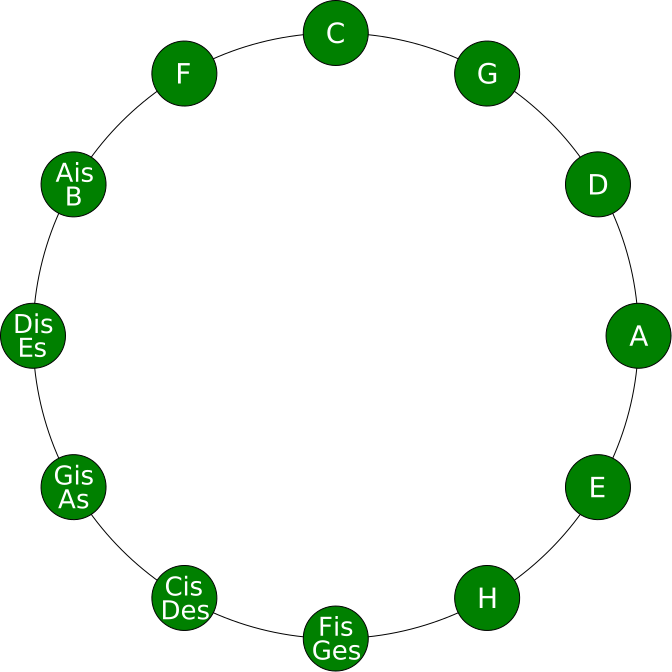
Wie findet man die Töne der gleichstufigen Stimmung auf dem Cello?
Nur mit dem Cello und den Ohren kann man nicht überprüfen, ob man einen bestimmten gleichstufigen Ton exakt getroffen hat. Dazu braucht man entweder ein gleichstufig gestimmtes Instrument, das genau diesen Ton zur Kontrolle mitspielt (Prime oder Oktave) oder ein Stimmgerät, denn Stimmgeräte sind auf die gleichstufige Stimmung eingestellt. Spielt man mit Klavier zusammen, bewegt man sich grösstenteils in der gleichstufigen Stimmung denn meistens ist der gespielte Celloton im Klavierpart verdoppelt. Der Vorteil der gleichstufigen Stimmung ist, dass es nur zwölf Töne/Intervalle gibt und diese in jeder Tonart genau gleich intoniert werden. Der Nachteil ist, dass mit Ausnahme der Oktave keines der Intervalle rein ist. Meistens stört uns das nicht, weil wir uns so sehr an die gleichstufige Stimmung gewöhnt haben. Aber wer einmal folgende Beispiele auf dem Cello nachspielt, wird merken wie "verstimmt" die gleichstufige Stimmung im Grunde ist.
Beispiel 1: stimme die Saiten mit dem Stimmgerät. Spiele in der ersten Lage auf der D-, G- oder C-Saite den zweiten Finger (F, B, oder Es). Intoniere den Ton so, dass das Stimmgerät ihn als genau richtig anzeigt. Ohne den Finger zu verändern, spiele nun die obere leere Saite dazu. Klingt das für dich genau richtig?
Beispiel 2: stimme die Saiten mit dem Stimmgerät. Spiele in der ersten Lage auf der D- oder G-Saite den ersten Finger (E bzw. A). Intoniere den Ton so, dass das Stimmgerät ihn als genau richtig anzeigt. Ohne den Finger zu verändern, spiele nun die obere oder die untere leere Saite dazu. Klingt das für dich genau richtig?
Möchtest Du wissen, wie Du die Töne dieser Beispiele rein spielen kannst? Dann lese den Abschnitt zu den reinen Punkten.
rein
Zeigt, wo sich die Punkte der reinen Stimmung befinden. Sind die Saiten rein gestimmt, liegen die Punkte aller Saiten parallel (sofern sie sich in der gleichen Quintreihe befinden, dazu später mehr). Sind die Saiten gleichstufig gestimmt, verschieben sich die Punkte jeder unteren Saite minimal. Ist keine Saitenstimmung ausgewählt, werden die Punkte in reiner Saitenstimmung angezeigt.
Da das Cello im Gegensatz zu Tasteninstrumenten keine feste Stimmung der Einzeltöne hat, kann der Spieler mit Ausnahme der leeren Saiten frei intonieren. Das heisst, er kann zu jedem beliebigen Ton reine Intervalle intonieren. Das reine Stimmungssystem stellt man graphisch am besten in einem Gitter aus Quint- und Grossterzbeziehungen dar (Eulersches Tonnetz). In horizontaler Richtung ordnet man die Töne in Quinten (Quintreihen) an, in vertikaler Richtung in grossen Terzen (Terzspalten).
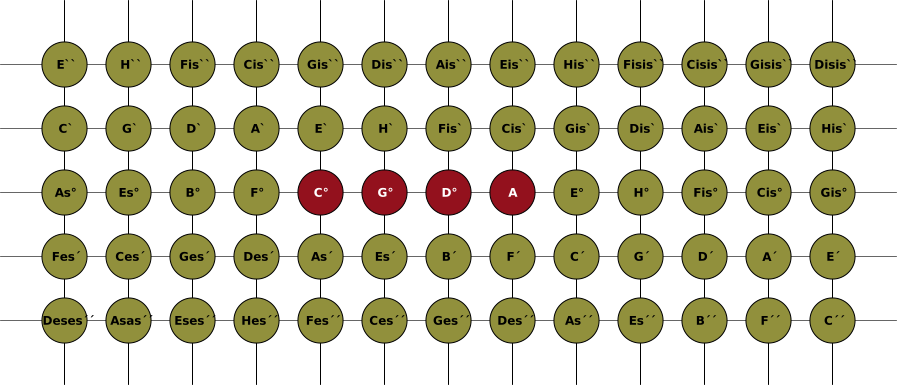
So befindet sich von jedem Ton aus rechts die Quinte, links die Unterquinte sprich Quarte, oberhalb die grosse Terz und unterhalb die Untergrossterz sprich kleine Sexte. Dieses Tonnetz kann man theoretisch endlos weiterspinnen. Es ist also ein offenes Stimmungssystem, das theoretisch aus endlos vielen Tönen und Intervallen besteht. cellofingerboard.info zeigt einen sinnvollen Ausschnitt aus diesem Geflecht aus Quint- und Terzbeziehungen.

Da dieses System zur Folge hat, dass verschiedene Töne auf ein und denselben Tonnamen treffen, habe ich den Tonnamen zur eindeutigen Identifikation diakritische Zeichen hinzugefügt. Der Kreis (°) bedeutet, dass sich der Ton in derselben Quintreihe wie die leeren Saiten befindet (Nullreihe). Der Gravis (`) bedeutet, dass sich der Ton in der Quintreihe der Oberterz (Oberterzreihe) befindet. Der Akut (´) bedeutet, dass sich der Ton in der Quintreihe der Unterterz (Unterterzreihe) befindet. Töne der Oberterzreihe sind ein syntonisches Komma tiefer, Töne der Unterterzreihe ein syntonisches Komma höher als deren Namensvetter aus der Nullreihe.
Das syntonische Komma ist der Unterschied zwischen der pythagoreischen Terz (im Eulerschen Tonnetz vier Quintschritte nach rechts) und der reinen Terz (im Eulerschen Tonnetz einen Terzschritt nach oben).
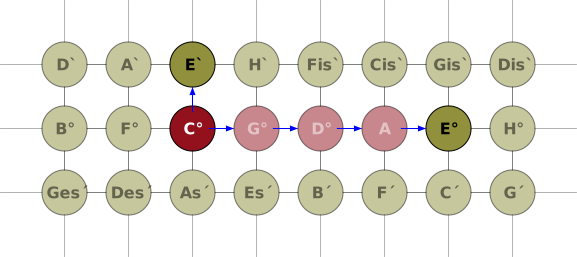
Wie findet man die Töne der reinen Stimmung auf dem Cello?
Ein paar der reinen Töne aus dem Eulerschen Tonnetz kann man alleine mit dem Cello spielen. Am einfachsten gehen Töne, die in einem direkten Quint-, Quart-, Terz- oder Sextverhältnis zur oberen oder unteren leeren Saite stehen. Hier noch einmal die obigen Beispiele aus dem Abschnitt zur gleichstufigen Stimmung:
Beispiel 1: stimme die Saiten in reinen Quinten, also nicht mit dem Stimmgerät, sondern nach Gehör (falls Du nicht weisst, wie das geht, findest Du im Saitenabschnitt eine Anleitung dazu). Spiele in der ersten Lage auf der D-, G- oder C-Saite den zweiten Finger (F, B oder Es) und spiele die obere leere Saite dazu. Intoniere den Ton so, dass keine Schwebungen zu hören sind. Wenn Du nun die leere Saite verlässt und nur noch den zweiten Finger spielst, hast Du einen Ton der Unterterzreihe (F´, B´ oder Es´). Das Stimmgerät sollte diese Töne als zu hoch anzeigen.
Beispiel 2: stimme die Saiten in reinen Quinten. Spiele in der ersten Lage auf der D- oder G-Saite den ersten Finger (E bzw. A) und spiele die obere leere Saite dazu. Intoniere den Ton so, dass keine Schwebungen zu hören sind. Wenn Du nun die leere Saite verlässt und nur noch den ersten Finger spielst, hast Du einen Ton der Nullreihe (E° bzw. A). Nun lasse den ersten Finger an diesem Punkt liegen und spiele die untere leere Saite dazu. Der Zweiklang ist nun nicht mehr schwebungsfrei. Korrigiere den Finger langsam in Richtung Obersattel bis die Schwebung zum Stillstand kommt und verlasse dann die leere Saite. Dieser tiefere erste Finger ist ein Ton der Oberterzreihe (E` bzw. A`).
Die Oktavpunkte sind zur besseren Orientierung rot gefärbt. Der erste Oktavpunkt befindet sich genau in der Mitte der Saite. Der zweite Oktavpunkt befindet sich genau in der Mitte zwischen dem ersten Oktavpunkt (der Mitte der Saite) und dem Ende der Saite (Steg), also bei genau 3/4 der ganzen Saite.
Show
names
Displays the names of the tones sounding.
The names of the just tones have diacritics appended to them. The ring (°) means that the tone is in the same row of fifths (zero row) as the concert pitch A. The grave accent (`) means that the tone is in the upper third row and a syntonic comma lower than its namesake from the zero row. The acute (´) signifies that the tone is in the lower third row and is a syntonic comma higher than its zero row namesake. See the points section for more information.
The harmonics are also just tones. If the strings are tuned in equal fifths, the cent deviations are also displayed in addition to the just note names. The names of the harmonics of the string divided by seven are supplemented by downward arrows. The downward arrow means that the note is a Leipzig comma (also called a 7th comma) lower (27.26 cents) than its zero row namesake - or 31.18 cents lower than its equal temperament namesake. See the harmonics section for more information.
numbers
Displays the imaginary fret numbers. Since everything repeats itself after twelve frets, it is advantageous to start again at 1 after the twelfth "fret". From this point of view you only have to learn the first octave and if you play in the second or third octave you can stay in the first octave in the imagination. The second octave is basically just a repeat of the first octave exactly half as large. The third octave is again only half of the second and so on.
If the just points or the harmonics are selected, the cent deviations to the "frets" of the equal temperament are displayed in addition to the numbers.
Cent
The cent is an auxiliary unit of measure for comparing interval sizes. A cent is one hundredth of an equal tempered semitone. A semitone is 100 cents and an octave is 1200 cents.
Zeige
Namen
Zeigt die Namen der klingenden Töne an.
Den Namen der reinen Töne sind diakritische Zeichen angehängt. Der Ring (°) bedeutet, dass sich der Ton in der gleichen Quintreihe (Nullreihe) wie der Stimmton A befindet. Der Gravis (`) bedeutet, dass sich der Ton in der Oberterzreihe befindet und ein syntonisches Komma tiefer als sein Namensvetter aus der Nullreihe ist. Der Akut (´) bedeutet, dass sich der Ton in der Unterterzreihe befindet und ein syntonisches Komma höher als sein Namensvetter aus der Nullreihe ist. Weitere Informationen dazu findest Du im Abschnitt zu den Punkten.
Die Flageoletttöne sind ebenfalls reine Töne. Sind die Saiten gleichstufig gestimmt, werden zu den reinen Tonnamen noch die Centabweichungen angezeigt. Die Namen der Flageoletttöne der Saitenteilung durch sieben sind durch Pfeile nach unten ergänzt. Der Pfeil nach unten bedeutet, dass der Ton ein Leipziger Komma (auch septimales Komma genannt) tiefer (27,26 Cents) als sein Namensvetter der reinen Stimmung ist - respektive 31,18 Cents tiefer als sein Namensvetter der gleichstufigen Stimmung. Weitere Informationen dazu findest Du im Abschnitt über die Flageoletttöne.
Nummern
Zeigt die Nummern der imaginären Bünde an. Da sich nach zwölf Bünden alles wiederholt, ist es von Vorteil, nach dem zwölften Bund wieder bei 1 anzufangen. So betrachtet, muss man nur die erste Oktave lernen und kann, wenn man in der zweiten oder dritten Oktave spielt, in der Vorstellung in der ersten Oktave bleiben. Die zweite Oktave ist im Grunde genommen nur eine genau halb so grosse Wiederholung der ersten Oktave. Die dritte Oktave ist wiederum nur die Hälfte der zweiten und so weiter
Sind die reinen Punkte oder die Flageoletttöne ausgewählt, werden zusätzlich zu den Nummern noch die Centabweichungen zu den gleichstufigen Bünden angezeigt.
Cent
Das Cent ist eine Hilfsmasseinheit zum Vergleichen der Intervallgrössen. Ein Cent ist ein Hundertstel eines gleichmässig temperierten Halbtones. Ein Halbton hat also 100 Cents und eine Oktave 1200 Cents.
Positions traditional
Displays the tones of the selected position(s). The key can be changed in the drop-down menu. cellofingerboard.info only shows the first seven positions of each string.
The positions are used for orientation on the fingerboard. The cello does not have a standardized system of positions, but traditionally the positions have been named according to the diatonic steps of the notation. If the first finger is one note higher than the open string, you are in 1st position, if the first finger is two notes higher, you are in 2nd position, etc. If the first finger is on the same note step as the open string (A#, D#, G#, C#) one speaks of the half position.
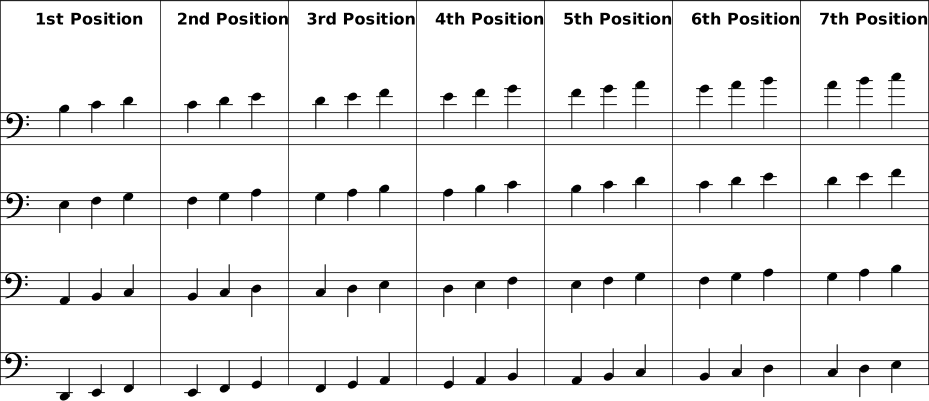
According to this approach, you already have a system with the root tones that is not the same for all strings. In keys with up to four accidentals there are already up to three different geographical positions for one and the same traditional position (1st finger on D, D# or D♭) and in G♭ major all tones are one position lower than in the enharmonic same F# major . The location alone does not indicate an absolute geographical position on the fingerboard, but only serves as an approximate orientation for the first time. However, there are cello schools that further subdivide the positions for clear geographical definition. In his cello method, which first appeared in 1839, Friedrich August Kummer made a chromatic system out of the diatonic system by inserting "half positions" between the usual positions. A chromatic approach to the position system was also followed by other cello schools (e.g. Karl Davidoff). To date, neither a diatonic nor a chromatic position system has been able to establish itself. In today's cello schools, you find different names and definitions of the positions.
cellofingerboard.info shows the diatonic approach to defining the positions. A chromatic approach is explained in the positions absolute section.
Lagen
Zeigt die Töne der ausgewählten Lage(n) an. Im Dropdown-Menu kann die Tonart geändert werden. cellofingerboard.info zeigt nur die ersten sieben Lagen jeder Saite an.
Die Lagen dienen der Orientierung auf dem Griffbrett. Das Cello hat kein standardisiertes Lagensystem, aber traditionellerweise richtet sich die Benennung der Lagen nach den diatonischen Stufen der Notation. Ist der erste Finger eine Tonstufe höher als die leere Saite, befindet man sich in der 1. Lage, ist der erste Finger zwei Tonstufen höher, befindet man sich in der 2. Lage usw.. Ist der erste Finger auf der gleichen Tonstufe wie die leere Saite (Ais, Dis, Gis, Cis) spricht man von der halben Lage.
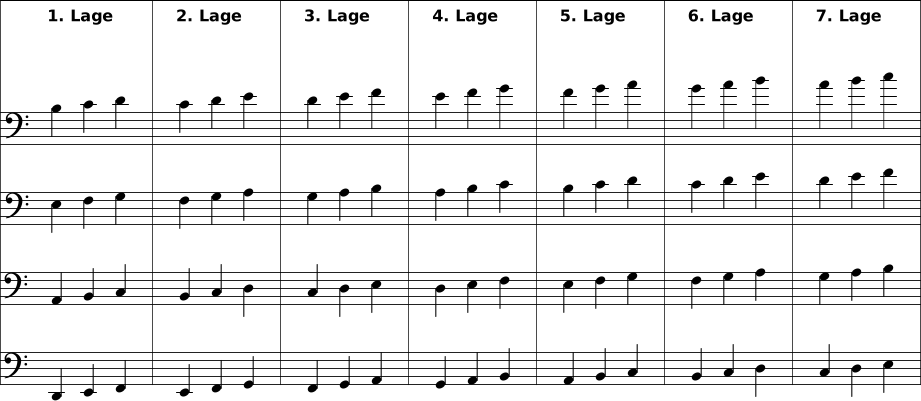
Nach diesem Ansatz hat man bereits bei den Stammtönen ein System, das nicht für alle Saiten gleich ist. Bei Tonarten mit bis zu vier Vorzeichen gibt es bereits bis zu drei verschiedene geographische Positionen für ein und dieselbe Lage (1. Finger auf D, Dis oder Des) und in Ges-Dur sind alle Töne eine Lage tiefer als im enharmonisch gleichen Fis-Dur. Die Lage alleine bezeichnet also keine absolute geographische Position auf dem Griffbrett, sondern dient erstmals nur zur ungefähren Orientierung. Es gibt jedoch Celloschulen, welche die Lagen zur eindeutigen geographischen Definition noch weiter unterteilen. So machte bereits Friedrich August Kummer in seiner 1839 erstmals erschienenen Celloschule aus dem diatonischen Lagensystem ein chromatisches, indem er zwischen die gängigen Lagen noch "halbe Lagen" einfügte. Ein chromatischer Ansatz des Lagensystems wurde auch von anderen Celloschulen (z. B. Karl Davidoff) verfolgt. Bis heute konnte sich weder ein diatonisches noch ein chromatisches Lagensystem klar durchsetzen. So findet man in heutigen Celloschulen verschiedene Bezeichnungen und Definitionen der Lagen.
cellofingerboard.info zeigt den diatonischen Ansatz zur Definition der Lagen. Ein chromatischer Ansatz wird bei den absoluten Positionen erklärt.
Positions absolute
The absolute positions are an alternative position system that is based on the geographic locations on the fingerboard and can be used in all ranges of positions (neck positions, transition positions, thumb positions).
If you play a scale (major/minor) on the cello without using the open strings, you have to shift your hand position after three notes at the latest. While the thumb positions can be used to play four diatonic steps in one hand position, this is usually only done when playing across multiple strings. If you only play one string, you usually shift your hand position after two or three notes and do not play any notes with your thumb. So in most cases you have a three-finger fingering system on the cello. If you stay with the notes inherent in the scale, there are only three different fingering patterns:
The 3 fingering patterns in the neck positions
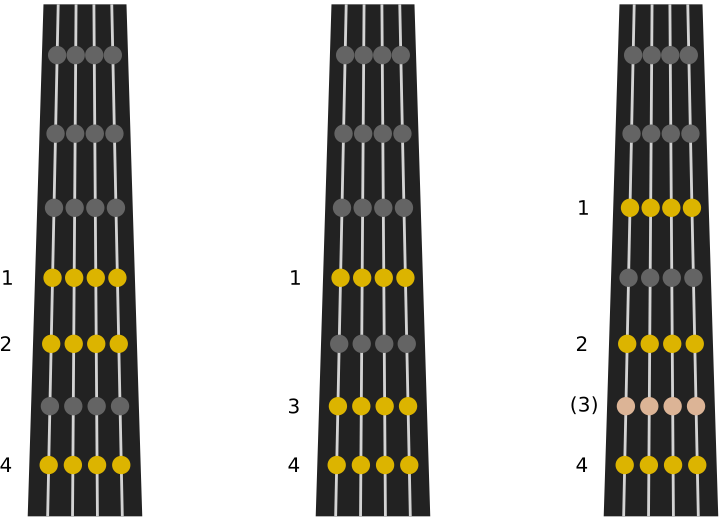
As you can see in the graphic above, in the first two fingering patterns one finger is placed on each semitone. This is called the narrow grip. With the third fingering pattern, the second, third and fourth fingers and the thumb (on the neck) are in the same place as with the narrow grip, only the first finger is stretched backwards. This is called the wide grip. In the neck positions there are basically only two grips - the narrow grip and the wide grip.
The first absolute position is where it is first possible to place a full narrow grip (1st finger on the first "fret"). In order to reach the first wide grip from the (absolute) position 1, you have to push the arm, the hand and four out of five fingers as a unit one "fret" further. That's why it makes sense to call the first possible wide grip position 2 wide. The location of the first finger is therefore not decisive for the designation of the absolute positions, but where the unit of arm, thumb and second to fourth fingers is located. The only exception: in the 8 wide position, the thumb can no longer go with this unit, but remains in the neck angle (as in the position 7 ).
From position 9 or when playing with the thumb rest, the fingering of the three patterns changes.
The 3 fingering patterns in the transition and thumb positions
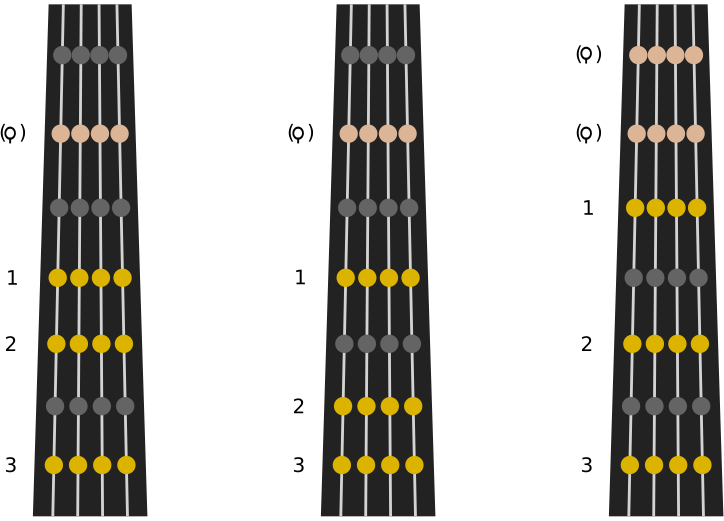
The fourth finger is replaced by the third and the third by the second finger. The second finger takes the place of the second and third fingers. When the thumb is placed on the fingerboard, it is placed a whole tone away from the first finger for the first two fingering patterns. In the third fingering pattern, the thumb can be a whole or semitone away from the first finger. In the thumb positions, there are four different fingering patterns with the tones inherent in the scale.
cellofingerboard.info only shows the absolute positions for the first octave, as the system repeats itself in each subsequent octave. So that one does not lose one's orientation when playing in the upper octaves, one can always remain in the imagination in the familiar first octave. Of course, this trick also works with the traditional positions.
Positionen absolut
Die absoluten Positionen sind ein alternatives Lagensystem, das sich nach den geographischen Orten auf dem Griffbrett richtet und in allen Lagenbereichen (Halslagen, Übergangslagen, Daumenlagen) angewendet werden kann.
Spielt man auf dem Cello eine Tonleiter (Dur/Moll) ohne Verwendung der leeren Saiten, muss man jeweils spätestens nach drei Tönen die Handposition verschieben, sprich die Lage wechseln. In den Daumenlagen kann man zwar vier diatonische Schritte in einer Handposition spielen, doch tut man dies normalerweise nur, wenn man über mehrere Saiten spielt. Spielt man nur auf einer Saite, verschiebt man in der Regel nach zwei oder drei Tönen die Handposition und spielt dabei keine Töne mit dem Daumen. In den meisten Fällen hat man also ein Dreifinger-Griffsystem auf dem Cello. Bleibt man bei leitereigenen Tönen, gibt es nur drei verschiedene Griffmuster (auch Griffbilder oder Patterns genannt):
Die drei Griffmuster in den Halslagen
Wie man auf obiger Graphik sieht, kommt bei den ersten zwei Griffmustern auf jeden Halbton ein Finger zu liegen. Dies nennt man den engen Griff. Beim dritten Griffmuster liegen der zweite, der dritte und der vierte Finger sowie der Daumen (am Hals) an der gleichen Stelle wie beim engen Griff, einzig der erste Finger wird abgestreckt. Dies nennt man den weiten Griff. In den Halslagen gibt es also im Grunde nur zwei Griffe – den engen und den weiten Griff.
Die erste absolute Position befindet sich dort, wo es erstmals möglich ist, einen vollständigen engen Griff zu platzieren (1. Finger auf dem ersten "Bund"). Um von der (absoluten) Position 1 den ersten weiten Griff zu erreichen, muss man den Arm, die Hand und vier von fünf Fingern als eine Einheit einen "Bund" weiterschieben. Darum ist es sinnvoll den erstmöglichen weiten Griff als Position 2 weit zu bezeichnen. Für die Bezeichnung der absoluten Positionen ist also nicht der Ort des ersten Fingers entscheidend, sondern wo sich die Einheit aus Arm, Daumen und zweiter bis vierter Finger befindet. Einzige Ausnahme: bei der Position 8 weit kann der Daumen nicht mehr mit dieser Einheit mitgehen, sondern bleibt im Halswinkel liegen (wie bei der Position 7 ).
Ab der Position 9 oder beim Spielen mit Daumenaufsatz ändert sich der Fingersatz der drei Griffmuster.
Die drei Griffmuster in den Übergangs- und Daumenlagen
Der vierte Finger wird durch den dritten und der dritte durch den zweiten Finger ersetzt. Der zweite Finger übernimmt die Plätze des zweiten und des dritten Fingers. Wird der Daumen auf das Griffbrett gesetzt, wird er bei den ersten zwei Griffmustern in einem Ganztonabstand zum ersten Finger platziert. Beim dritten Griffmuster kann der Daumen in einem Ganz- oder Halbtonabstand zum ersten Finger zu liegen kommen. In den Daumenlagen gibt es mit leitereigenen Tönen also vier verschiedene Griffmuster.
cellofingerboard.info zeigt die absoluten Positionen nur für die erste Oktave an, da sich das System in jeder weiteren Oktave wiederholt. Damit man beim Spielen in den oberen Oktaven die Orientierung nicht verliert, kann man in der Vorstellung immer in der vertrauten ersten Oktave bleiben. Dieser Trick funktioniert natürlich auch mit den traditionellen Lagen.
Harmonics
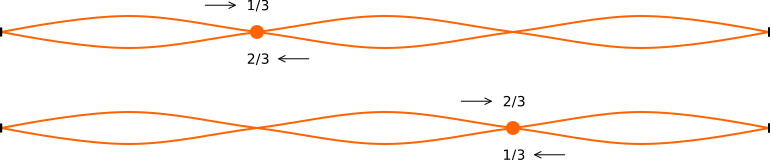
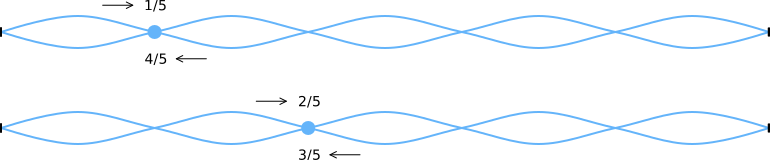
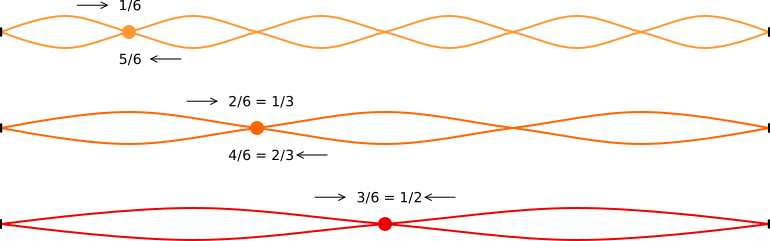
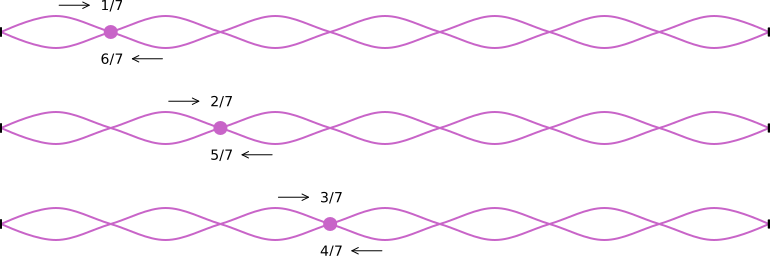
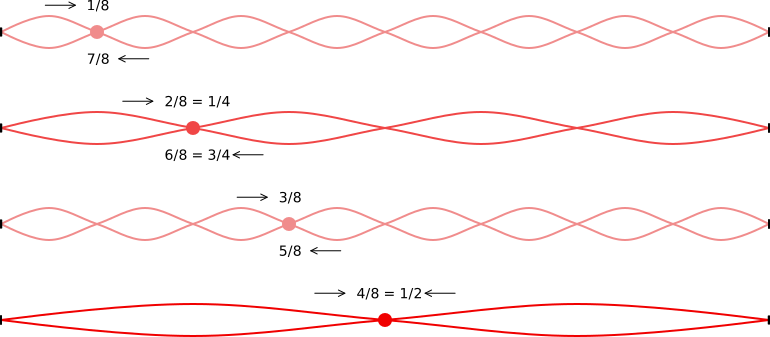
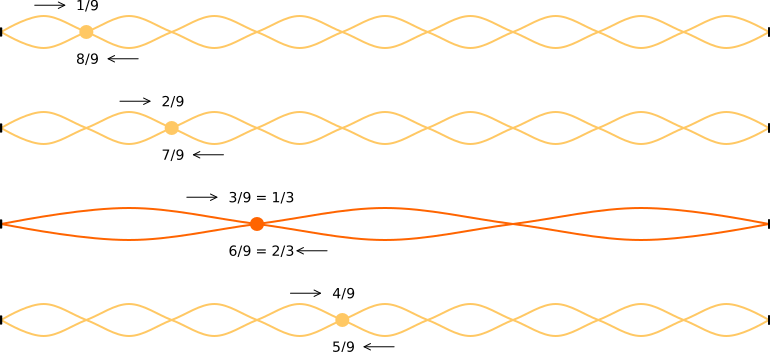
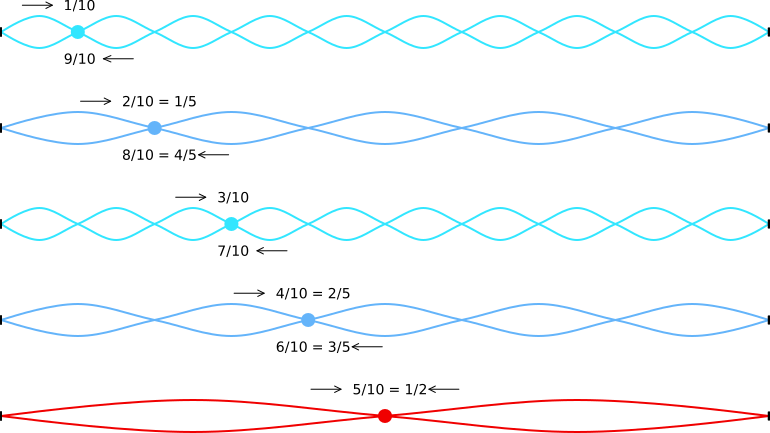
A harmonic is played by placing a finger lightly on a certain point on the string without pressing it down on the fingerboard. The string section "behind" the finger also vibrates. But where exactly are the points of the harmonics?
If the string is divided into any number of equally sized parts, there is a harmonic at each division point of the string. cellofingerboard.info shows all division points (harmonics) from two to ten divisions.
2 division

3 division
4 division

5 division
6 division
7 division
8 division
9 division
10 division
Flageoletts
Einen Flageolettton spielt man, in dem man einen Finger leicht an einen bestimmten Punkt auf die Saite legt, ohne diese auf das Griffbrett runterzudrücken. So schwingt auch der Saitenteil "hinter" dem Finger mit. Doch wo genau liegen die Punkte der Flageoletttöne?
Teilt man die Saite in beliebig viele gleich grosse Teile, so gibt es bei jedem Teilungspunkt der Saite einen Flageolettton. cellofingerboard.info zeigt alle Teilungspunkte (Flageoletttöne) von der Zwei- bis zur Zehnteilung an.
2-Teilung
3-Teilung
4-Teilung
5-Teilung
6-Teilung
7-Teilung
8-Teilung
9-Teilung
10-Teilung
